Photography can make a sustainability report easier to understand, but an image is not proof of an environmental result. For UAE organizations preparing an annual report, impact update or campaign, the most useful image library shows specific activities accurately, connects each frame to a verified caption, and keeps illustrative visuals clearly separate from evidence. A disciplined brief helps the pictures support the reporting without overstating what the organization has measured or achieved.
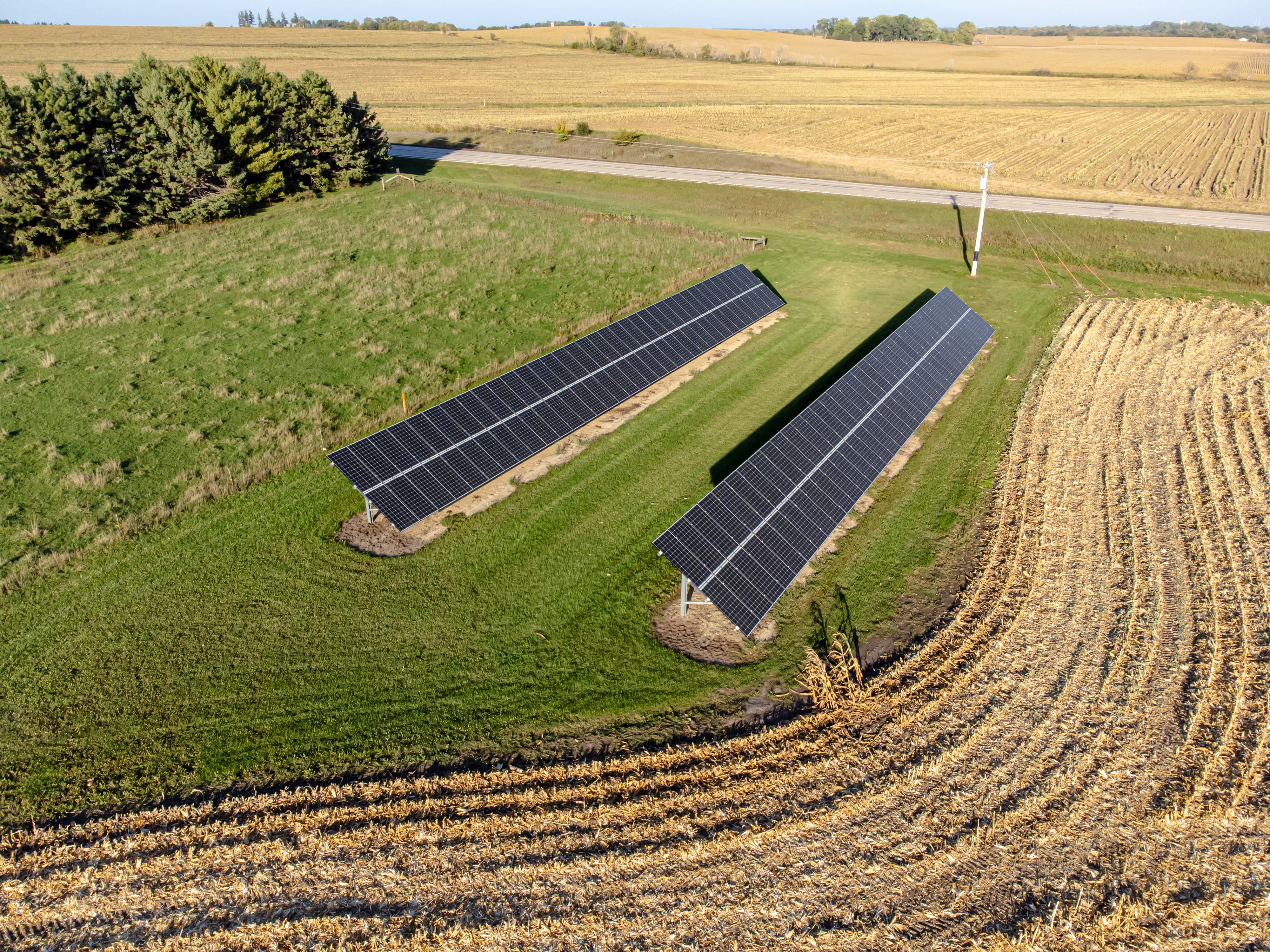
Illustrative image: solar panels at a farm in Minnesota, USA. It is not a UAE site or an EquiGroup client project.
Decide whether each frame is evidence or illustration
A photograph can document that an activity, place or piece of equipment existed at a particular time. By itself it cannot establish energy savings, emissions reductions, recycled content, water performance or the scale of an outcome. Those claims need their own records, calculations or measurements. This distinction matters in sustainability communications because a visually persuasive image can unintentionally imply more than its caption or the underlying data supports.
Make that distinction visible in the shot list. Label each planned image as either documentary—showing an actual activity relevant to a stated report section—or illustrative, used to create context or atmosphere. Keep illustrative images away from captions that imply a specific site, output or result. The cover image in this article, for example, is a public-domain photograph of panels at a farm in Minnesota; it is an illustration, not a UAE installation or a claim about any company.
The Global Reporting Initiative’s GRI 1 guidance sets principles such as accuracy, balance, clarity and verifiability for information reported under its standards. Photography is not a substitute for those principles, but it can either reinforce or blur them. Ask the reporting team to match every documentary frame to a claim, source record and reporting period before the image is selected for publication.
Translate report sections into real, photographable activity
Start with the material topics and facts the organization has already decided to report. For each one, ask: what activity actually took place, where did it take place, when, who can verify the description, and what should the audience understand from seeing it? This prevents a shoot from defaulting to generic images of solar panels, trees, recycling bins or greenery simply because they signal sustainability at a glance.
Build a compact visual plan around representative operations: a process, site, product, service or team that genuinely relates to the report’s content. If a company is describing efficiency work, photograph the real intervention or operating practice—not a decorative light bulb. If it is discussing waste management, identify the actual stage or system being described and confirm that the image depicts it fairly. Where no suitable documentary image exists, choose a clearly labelled illustration or omit the picture rather than imply an unverified achievement.
For a multi-site organization, avoid treating one photogenic location as representative of all operations. Record which site and reporting period each image relates to, and whether it shows a pilot, an ongoing practice or a completed project. The UAE’s national Net Zero strategy spans sectors including power, industry, transport, buildings, waste and agriculture; that broad context is a reminder that sustainability stories vary by activity. It does not mean any particular organization has work in each sector.
Keep captions tied to verified facts
A useful caption answers the basic questions without adding interpretation: who or what is shown, where and when the image was made, which report section it supports, and whether the frame is illustrative. Use the organization’s approved terms and identifiers. Do not label a site as “net zero,” “carbon neutral,” “zero waste” or “fully renewable” unless that exact wording has been reviewed against the relevant evidence and approved by the reporting team.
Keep the original filename, capture date, photographer credit, permission status and caption in a shared record. If the institution or organization uses a content-management system, agree how those details travel with the image into the final PDF, webpage or social post. Preserve an unaltered master and create crops or size variants as separate derivatives; avoid edits that change the visible activity or remove context needed to interpret the scene.
Also decide who is permitted to approve a caption and what happens when the evidence changes. If a reported project is delayed, narrowed or reclassified after the photography brief is written, update the image selection and description before publication. A technically accurate frame can still mislead when placed beside an outdated claim. Treat the caption, nearby headline and image as one communications unit during review.
Represent people and places with care
Sustainability stories often include workers, customers, community members or people using a service. Explain the intended uses before photographing, respect a person’s choice not to participate, and avoid frames that turn people into props for a corporate claim. The International Committee of the Red Cross’s ethical content-gathering guidance emphasizes dignity, respect and informed consent in public communications. It is especially useful when images involve communities, sensitive circumstances or personal information.
Do not stage an action to make a programme appear more effective, ask people to repeat a task that did not occur, or retouch away conditions that change the meaning of the scene. Where a person’s identity, workplace or location should not be disclosed, plan a different frame before capture rather than relying on a later blur. The reporting owner should also review whether the image is representative and whether it omits relevant context.
For UAE assignments, confirm access and publication conditions directly with the site owner, venue and participating organization. Requirements can differ by site, emirate, client and project; this article does not state a UAE-wide permit rule or provide legal advice. The team commissioning the work should identify who approves the location, participants, captions and final uses.
A pre-shoot checklist for sustainability imagery
List the report sections and claims the photography is meant to support.
Mark every planned frame as documentary evidence or illustrative context.
Confirm the actual site, activity, date and approved description with the reporting owner.
Identify who can verify each caption and which source record supports it.
Agree location access, participant information, consent and publication uses before capture.
Choose frames that are representative; note pilots, exceptions and limitations rather than implying universal coverage.
Preserve the original capture, credit and permission record; keep edited derivatives distinct.
Have the reporting or sustainability lead review image-caption pairs before publication.
The strongest sustainability image library is not the one with the most dramatic green imagery. It is the one where every picture has a clear purpose, accurate context and a documented relationship to the story beside it. A concise brief gives photographers, communications teams and report owners a shared standard: show what happened, describe it precisely, and let the verified data carry the claim.
EquiFilms provides both film and photography within the EquiGroup portfolio. If your team is preparing a sustainability report, impact update or corporate image library, share the planned uses, site access conditions and reporting review process through the EquiFilms page to discuss a suitable photography scope.
Authoritative sources
GRI 1: Foundation 2021 — reporting principles